Understanding Load Balancing

Why Your Breakers Aren’t Randomly Placed

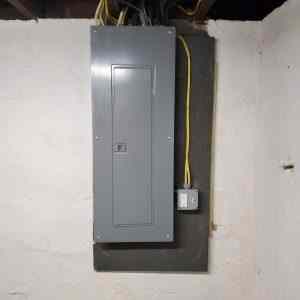
If you’ve ever opened your electrical panel and wondered why the breakers seem scattered with no obvious logic, you’re not alone. To most homeowners, breaker placement looks random—lights here, outlets there, a big appliance breaker off to the side. But in reality, a properly wired electrical panel follows a deliberate load-balancing strategy designed to protect your home, improve performance, and prevent dangerous overloads.

At North Crest, LLC, we hear this question all the time: “Why is my kitchen breaker on the opposite side of the panel from my living room?” or “Why did my electrician move breakers around during an upgrade?” The answer comes down to load balancing, one of the most important (and misunderstood) principles in residential electrical systems.

Let’s break it down in plain English.

What Is Electrical Load Balancing?

Electrical load balancing is the process of distributing electrical demand evenly across your home’s electrical panel. In most residential homes, power enters as 240 volts, which is split into two 120-volt “legs” inside the panel. Each breaker connects to one of these legs.

When loads are balanced correctly:

  • Both legs carry roughly the same electrical demand

  • Breakers trip less frequently

  • Wiring stays cooler

  • Appliances perform more reliably

  • The electrical system lasts longer

When loads are not balanced, one leg may become overloaded while the other is underused—leading to nuisance breaker trips, flickering lights, and long-term wear on your system.

Why Residential Panels Have Two “Sides”

Most standard breaker panels alternate power down each column. Even though the breakers appear stacked vertically, the power feeds alternate from one leg to the other as you move down the panel.

That’s why:

  • Two adjacent single-pole breakers are often on different legs

  • A double-pole breaker spans both legs to supply 240 volts (used for dryers, ranges, EV chargers, etc.)

This alternating layout allows electricians to strategically place circuits to balance demand across both sides of the panel.

So no—breakers aren’t placed randomly. They’re positioned to manage load safely and efficiently.

What Happens When Loads Aren’t Balanced?

  • An unbalanced electrical panel can cause several issues, some subtle and others serious.

    1. Frequent Breaker Trips

    If too many high-demand circuits are tied to one leg, breakers may trip even when total panel capacity isn’t maxed out.

    2. Flickering or Dimming Lights

    Lights dimming when appliances start often points to uneven load distribution or overloaded circuits.

    3. Overheating Wires and Connections

    Electrical components work harder when one side of the system carries too much demand, increasing heat buildup.

    4. Reduced Appliance Lifespan

    Motors, compressors, and electronics don’t like inconsistent voltage or stressed circuits.

    5. Limited Capacity for Future Upgrades

    Poor load balance can make it appear that a panel is “full” when it actually isn’t—leading to unnecessary upgrades.

How Electricians Balance Electrical Loads

Balancing loads isn’t guesswork—it’s part experience, part calculation, and part understanding how homeowners actually use electricity.

Step 1: Identifying High-Demand Circuits

Electricians first identify circuits that draw significant power, such as:

  • Kitchen appliance circuits

  • HVAC systems

  • Laundry equipment

  • EV chargers

  • Workshops or home offices

Step 2: Separating Continuous Loads

Appliances that run for long periods (like refrigerators or sump pumps) are spread across both legs instead of stacked on one side.

Step 3: Pairing Usage Patterns

For example:

  • Kitchen circuits on one leg

  • Bedroom lighting on the other

  • Laundry on the opposite leg of HVAC loads

This helps balance real-world usage, not just theoretical capacity.

Step 4: Adjusting During Panel Work

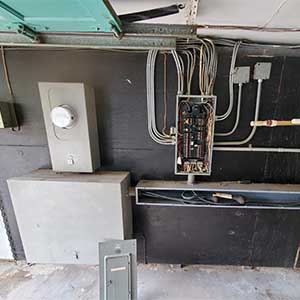
During panel upgrades or breaker replacements, electricians often move circuits—not because something was “wrong,” but to improve balance and performance.

Older Homes and Load Balancing Challenges

Homes built decades ago were not designed for today’s electrical demands. Back then:

  • Few outlets existed

  • No EV chargers

  • No home offices

  • Fewer kitchen appliances

As homes evolve, circuits get added—sometimes without proper rebalancing. Over time, this can create uneven loads that weren’t part of the original design.

Rebalancing is often one of the most cost-effective improvements homeowners can make in older properties.

The Bottom Line: Breaker Placement Is Intentional

Your electrical panel isn’t a jumble of switches—it’s a carefully designed system meant to distribute power safely throughout your home. When loads are balanced correctly, everything works better: lights stay steady, appliances run efficiently, and your electrical system remains safer for years to come.

Understanding load balancing helps homeowners make smarter decisions about upgrades, renovations, and electrical improvements—especially as modern homes demand more power than ever before.

If you’d like, I can next:

  • Write a follow-up blog tying load balancing to panel upgrades

  • Create a short FAQ version for service pages

  • Or outline a diagnostic checklist electricians use during inspections

Just tell me what you want to tackle next.

We Offer the Electrical Services in Rockland County, NY

and the surrounding areas.

North Crest, LLC

5.0

Rated 5 out of 5

Ken re-wired my mother’s entire electrical system. He was professional , extremely efficient and the cost came in under budget. He was communicative every step of the way, explaining exactly what had to be done and why. I highly recommend North Crest, LLC.
-Louise L.
Rated 5 out of 5

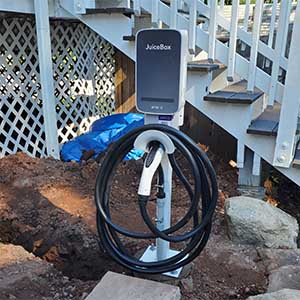
Ken installed a 60 amp circuit out to the driveway for an electric car charger. He was extremely prompt and responsive. Showed up early. Job was done efficiently and the inspector remarked about how good the work looked. He also cleaned up our panel and made things safer.

-Brian H.
Rated 5 out of 5

North Crest, LLC

5.0

Rated 5 out of 5

Ken was excellent to work with. We had an electric car charger installed in our garage and Ken was extremely knowledgeable and answered all our questions. His work work done flawlessly and efficiently. He was also very courteous and clean. I would recommend him for any job you need done!

-Ira M.

Rated 5 out of 5
Ken installed an attic ventilation unit which includes a fan, a switch, clean wiring from the jump box, and a thermostat. He was on time, quoted fair prices, and was pleasant to deal with. Furthermore, he consulted me with valuable recommendations regarding my additional concerns in the attic.
 
-Anthony E.
Rated 5 out of 5

Free Inspection and Estimate